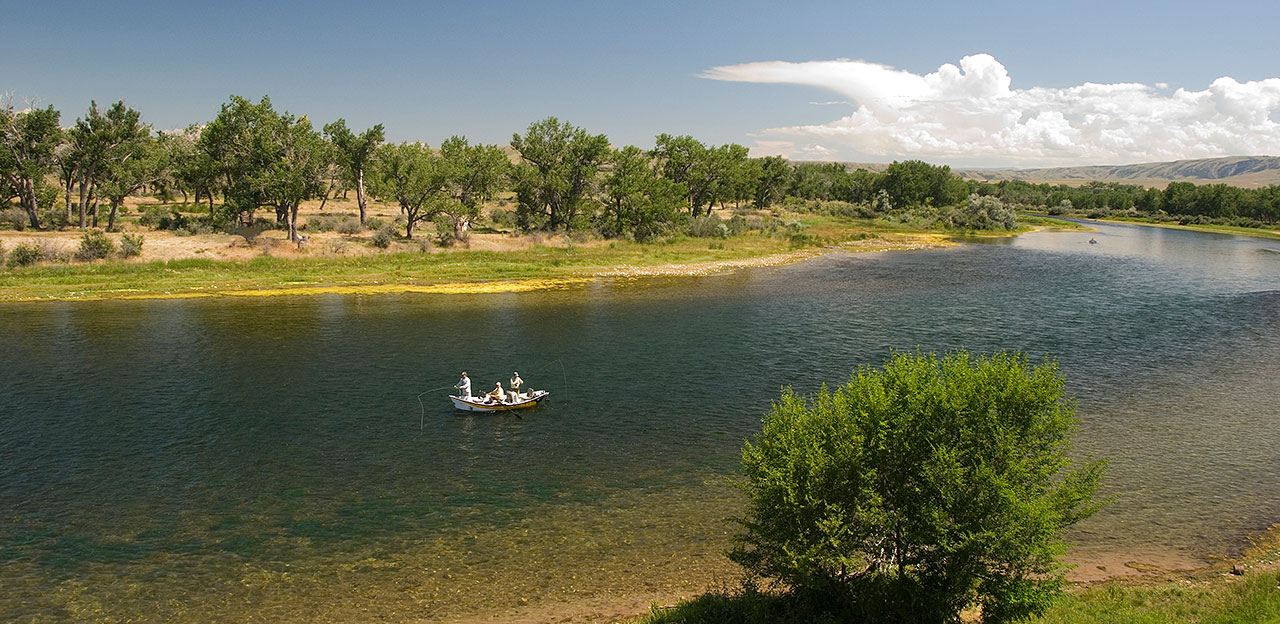
The Bighorn River
One of Montana's most well-known trout streams. Steady flows, consistent insect activity, and a variety of productive fishing water below Yellowtail Dam.

Dependable Flows, Prolific Hatches
The Bighorn River is one of Montana's most well-known trout streams and a favorite among anglers who enjoy steady flows, consistent insect activity, and a variety of productive fishing water. Beginning as a tailwater below Yellowtail Dam near Fort Smith, the Bighorn provides reliable fishing opportunities throughout much of the year — including months when most freestone rivers in the region are unfishable.
The upper thirteen miles receive the most attention and are known for dependable hatches. The river produces strong nymphing days with small patterns, reliable dry fly opportunities during seasonal hatches, and productive streamer days during shoulder seasons and fall months. Trout on the Bighorn average 16 to 18 inches, with fish over 20 inches landed regularly throughout the season.
The best times to fish the Bighorn are early spring, late fall, winter, and early summer. During runoff, when other rivers become high and off-color, the Bighorn often remains more fishable due to its tailwater influence — stabilizing faster than the freestone rivers in our region. This makes the Bighorn an essential part of any multi-day fishing itinerary, providing a reliable backup when conditions shift.
Boat fishing allows access to a wider range of water and helps anglers cover productive runs, seams, and shelves that hold fish consistently. The wading angler must take care, as the riverbed is slick moss and cobble in many areas, and flows can be deceptively strong. Most guided trips on the Bighorn are float trips by drift boat, covering eight to thirteen miles of water per day.
Species & What to Expect
The Bighorn supports healthy populations of both Rainbow and Brown Trout. Rainbows tend to dominate the upper river, holding in the faster riffles and runs where current delivers a steady supply of aquatic insects. Browns favor the slower, deeper water — undercut banks, logjams, and the soft inside edges of bends where they can feed efficiently.
What sets the Bighorn apart from other Montana trout streams is the sheer biomass. Aquatic insect populations are prolific, and the constant temperature regulation from Yellowtail Dam creates a year-round growing environment that few rivers can match. Fish feed aggressively and often — meaning more opportunities per hour on the water.
The Bighorn also fishes well for anglers of all skill levels. Beginners benefit from the river's forgiving nature — there are simply a lot of fish, and they eat consistently. Advanced anglers appreciate the technical dry fly fishing during heavy hatches, where matching size, profile, and drift becomes essential.
Access & Logistics
The Bighorn River is approximately a two-hour drive from Montana Fly Fishing Lodge. While it's the farthest of our regular waters, the quality of fishing — particularly during shoulder seasons — makes it well worth the drive. Your guide handles all logistics, and the scenic route through the Crow Reservation and along the base of the Bighorn Mountains is a Montana experience in itself.
We typically recommend the Bighorn for at least one day during a multi-day package, especially for guests visiting in early spring or late fall when the tailwater provides the most consistent fishing in the region. For guests booking longer stays, two days on the Bighorn allows coverage of different sections and techniques.
The Bighorn in Frame


Consistent Hatches, Year-Round
Explore More Rivers
Yellowstone River →
Stillwater River →
Private Water →
Begin Your Montana Story
Whether it's your first trip or your twentieth, there's always new water to discover. Let us help you plan the perfect fly fishing experience.

